
What I Love and Loathe About My Favorite AI Tool: Why You Should Care
AI TOOLS & AI SAFETY | June 30, 2026 | Blog Post
by Adele Berry

There is so much that I love and loathe about the latest, greatest and most powerful version of Claude, by Anthropic. It’s helped me complete tasks, like summarizing a complex work project in record time, but it’s also been rolled out in unexpected places and has been given access to my medical information without my consent.
Earlier today I got a Breaking News alert on my phone: “U.S. Lifts Restrictions on Anthropic’s Most Powerful A.I. Models.”
Yay! Does that mean I get my favorite AI tool, Claude Fable 5, back?
Just weeks ago I sat outside at a restaurant with a friend, and we both mourned the loss of Claude Fable 5. It had been snatched out of consumers’ hands after the government restricted this version of Claude Mythos.
“Fable 5 was so good. So smart,” we agreed. Better than every other LLM (large language model) we used regularly.
Claude Fable 5 runs on the same underlying model as Claude Mythos 5, Anthropic’s most powerful system, but with enhanced safeguards so people can use it safely.
Back in April, Anthropic, the company behind Claude, refused to release Mythos to the public because it can find the vulnerabilities in most major operating systems and web browsers. In other words, Claude Mythos is a hacking genius. It could break into banks, medical records and big tech accounts like your Apple, Amazon and Google accounts the same way a locksmith can break into a school locker — easily.
As a result, Anthropic gave Mythos to a small number of organizations, so they could patch their software’s weak spots before bad actors found them.
Fast forward to June 9, 2026: Anthropic released Claude Fable 5. I started using it that day, along with many other people, and I loved it.
Three days later it was gone. On June 12, the U.S. Department of Commerce sent Anthropic a directive that blocked anyone who isn't a U.S. citizen from using it, including Anthropic's own non-citizen employees. So Anthropic cut off everyone, U.S. citizens and non-citizens alike — including me.
But let me back up. I wasn’t always a huge fan of Claude. Almost two years ago, I tested Claude, Perplexity and ChatGPT with the same series of prompts to see which was best at assisting me. Back then Claude failed miserably and came in last place. But things change fast in AI development. We’re talking Star Trek warp speed fast!
What I Love About Claude
Recently, I used Claude Fable 5 to audit my professional website, and it did an outstanding job. It caught writing inconsistencies. It flagged extra spaces around punctuation and between words. It even found a page where I had the wrong meta description, because I had built the page by copying an old one and forgotten to update the back-end page description.
Fable 5 also checked my math. I had written that I helped a client grow sales 71%, a number I took from the company’s CFO and never double-checked. Fable 5 recalculated the growth, from $3.5 million to $6.3 million, and it came to 80%, not 71%.
Lately, I have also been experimenting with Claude Design, which came out in April of this year. It created a thoughtfully designed slide show of one of my projects after I simply provided the link to the web page that detailed the project.
And months ago, I started building a new website and have several apps that I want to build with Claude Code, AI that codes software on your behalf. All of it feels exciting and promising.
But throughout my Claude usage I made deliberate choices to limit what I uploaded. I primarily shared work-related information with Claude that’s already publicly available: my LinkedIn profile, my resume, my professional website. I’ve purposely refrained from sharing private information such as medical and financial records. I guard the privacy of my data that I don’t want out in the universe as much as possible.
What I Loathe About Claude
I love the efficiency and productivity Fable 5 provides me. But I loathe that my access vanished without warning, even though I’m a paid Claude subscriber.
You cannot hand me electric power tools to build a house, then take them back and expect me to be happy swinging a hammer. That is what losing Fable 5 felt like. It had me working at a level far above Claude Opus 4.8, the next model down.
Losing Fable 5 was disappointing. But my next Claude revelation was alarming.
A few days ago, I received a summary from one of my health care providers, and I recognized Claude-speak in the writing.
My health care provider’s sentence began with: “The moment that landed…,” an awkward phrasing Claude often generates and a telltale sign that the summary was not written by a human.
So I messaged my provider and asked whether she was using Claude.ai, and whether this AI usage was HIPAA compliant. Needless to say, I was concerned that Claude had been sitting in on my visit, noting everything I said.
My provider responded that she had never heard of Claude. But she reached out to her company’s IT department, which confirmed, “The name of the system that built our tool is Anthropic Claude. This tool is HIPAA compliant, built into the platform.”
How is it that neither my health care provider nor I knew Claude was capturing every detail of my visit?
What’s the Moral of My Story?
Opting in to an AI tool, even as a paying subscriber, does not give me control of that AI tool. A government directive, dropped without warning, can cut my paid access overnight.
And at the same time, that same tool was handed my private medical information without my knowledge or my consent. This type of disclosure doesn’t end with me. The next visit quietly summarized by AI may be yours.
As Mythos itself has proven, all systems are hackable. How long before Claude is hacked (again) and my medical data is breached?
After all, it was just this past March that Anthropic disclosed an accidental code leak of Claude Code, and a separate leak days earlier exposed internal files about its unreleased Mythos model.
Am I naive to hope that Mythos has been used to fortify my medical data in the system that my health care provider uses? Even if that’s the case, does Anthropic now know what I’m discussing with my health care provider? I guess I won’t know until sometime in the future when I get an alert that my health care provider’s AI-infused platform has been hacked.
The silver lining in all of this is that Claude Fable 5 received a Get Out of Jail Free card and is supposed to be returning July 1. I’m still concerned about my data privacy, but I’m excited to get back to work with the most powerful available version of my favorite AI tool.
The government eased the restriction on Mythos on June 26, 2026, and on June 30 the Commerce Department lifted the controls on both models.
Untethered AI Everywhere, All at Once
But the return of my favorite AI tool doesn’t give me control over it even as a paid subscriber. Fable 5 and any future version of Claude, could be snatched again, without warning. We may love our online tools, but they aren’t ours.
Love it or loathe it, AI is untethered everywhere, all at once.
It’s in our health care, our browsers, our schools, our workplaces and our public spaces. Biometric readers are widespread at many American airports, and AI eyeglasses and other wearables covertly see and record everything without our permission.
Alone, I have little say over my access to AI tools, or how those tools are used on me.
Together, we do. We can elect officials who will write meaningful laws guiding how AI is deployed, and demand a say over how AI is inserted into our lives.
If you do one thing after reading this, email your representatives in Congress and tell them, “Pass AI regulation that protects individual privacy and data from use without consent.”
Check out my post A Vision of a World Without AI Safety Guardrails: An American City in 2028 to see what untethered AI everywhere, all at once looks like in the near future.
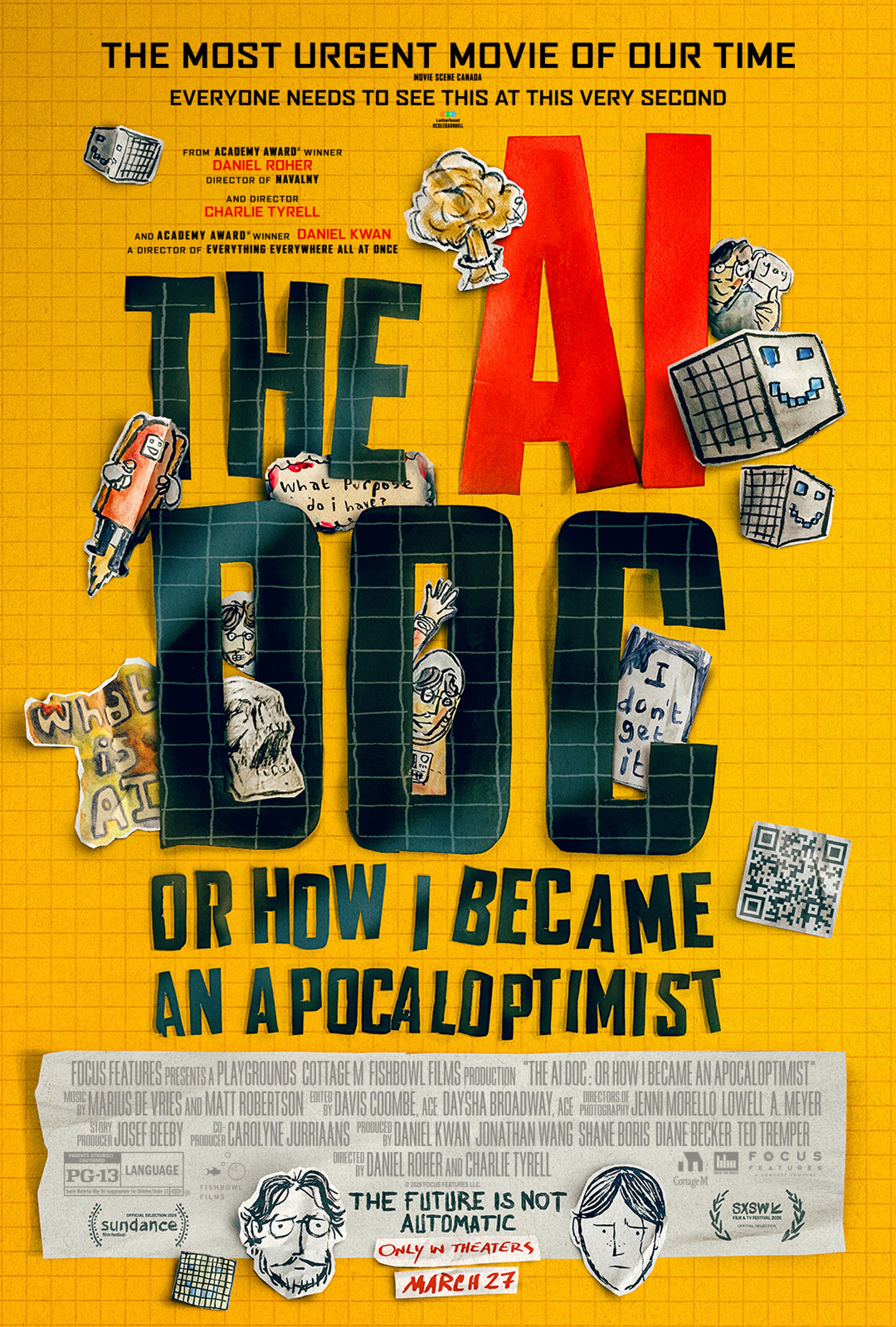
Learn More. If you missed it in theaters and are still curious about AI, be sure to check out The AI Doc: Or How I Became an Apocaloptimist. It’s now available for streaming.